FLOWER STORIESGuides
After the Funeral Has Ended: How to Offer Late Condolences
Once the mourning room has been cleared, there are still ways to offer comfort
Once the mourning room has been cleared, there are still ways to offer comfort
You heard the news late, and when you count back the days, you realize the 발인 (balin, the carrying out of the coffin that ends the funeral) has already passed. You may be wondering whether you can still send a wreath, or whether a phone call now would be an intrusion. This guide starts there.
Missing the 발인 does not mean you have missed your chance to offer comfort. You just do it differently.
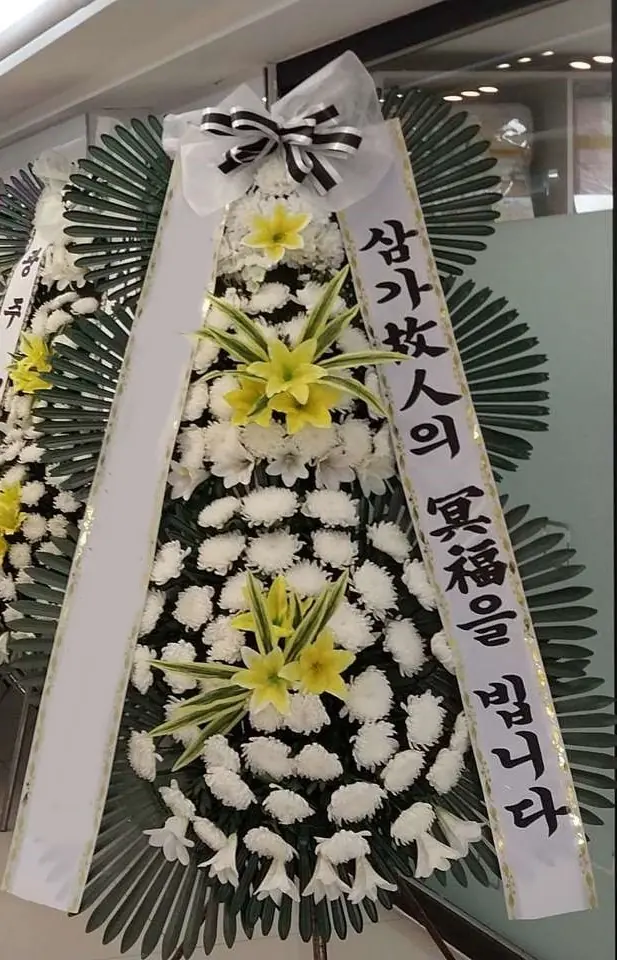
Usually not. A 근조화환 (standing condolence wreath) is meant for the funeral hall. It stands in the 빈소 (binso, the mourning room where the family receives visitors) and greets people who come to pay their respects. Once the 빈소 is cleared after the 발인, there is nowhere to put it.
If a wreath reaches the funeral hall late, staff deal with it, not the family. A three-tier wreath delivered to the home is no better: the family has nowhere to put it and no easy way to get rid of it. They receive a chore before they receive your sympathy.
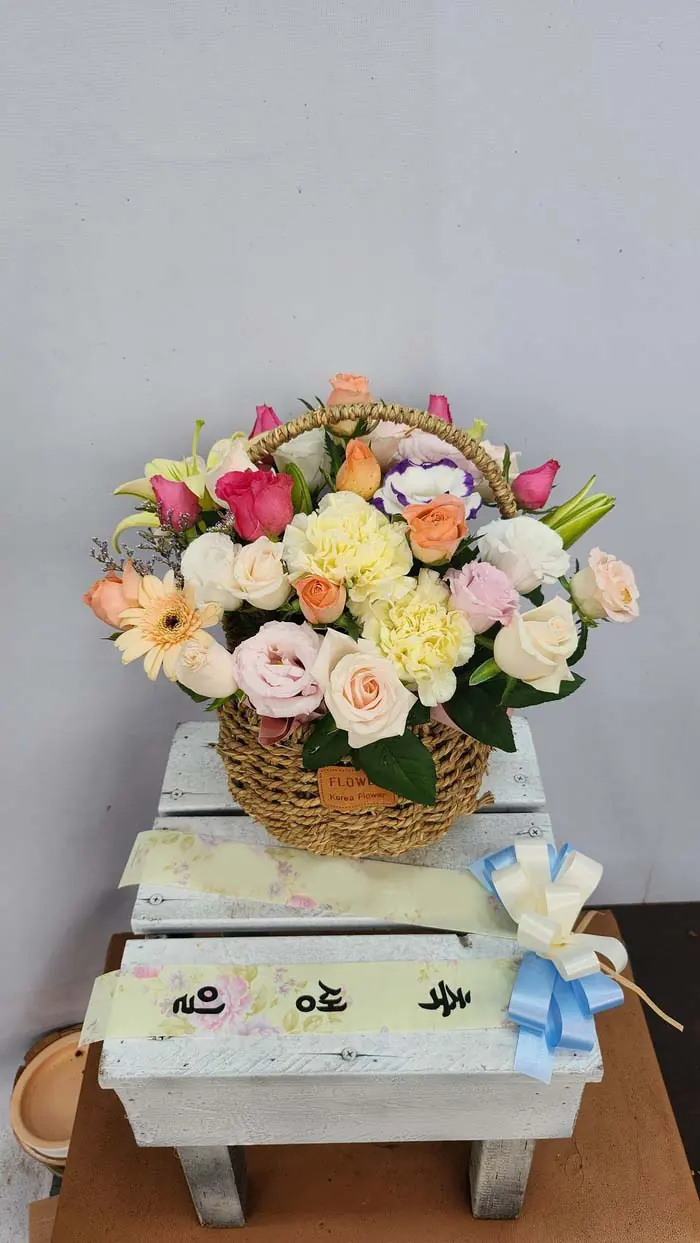
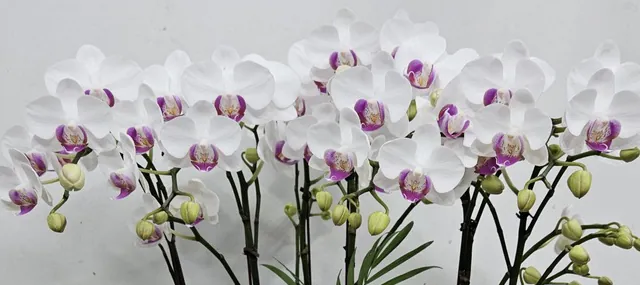
So after the 발인, send a different kind of flowers. A white flower basket that fits on a living-room table, or a white orchid that the family can keep and look after for a long time, takes the wreath's place.
If you want to leave flowers at the burial site or columbarium, ask the family first, because each facility has its own rules about what visitors can bring in. Asking where the deceased rests is also a way of showing that you remember them.
The right approach depends on when you learned of the death. Here it is, arranged by where the family is in the mourning period.
| When you learned of the death | What fits | What to keep in mind |
|---|---|---|
| Just after the 발인, before the 삼우제 (samujae, the rite held three days after burial) | A phone call or text message | The family is at its most exhausted, so keep calls short |
| Around the 삼우제 | A white flower basket sent to the home | Check first that the recipient will be at home |
| After the 삼우제, before the 49재 (the memorial rite held on the 49th day after death) | A white orchid, a handwritten letter | Something that stays with them longer than cut flowers suits this period |
| Around the 49재 | A call to ask how they are, a visit | Remembering the date says something in itself |
Start the call with an apology: “I only just heard. I’m sorry I couldn’t come to pay my respects. You must be going through so much.” Those three sentences are enough. You don't need to keep talking.
In a letter, write “May they rest in peace” and then add one line about a memory you shared with the deceased. Don't explain why you heard late, and don't ask about the cause of death.
Around the 49재, a simple check-in such as “It’s been 49 days already. How have you been?” comes across naturally. By then the calls and messages that came during the funeral have stopped and the house has gone quiet.
You can still give condolence money late. If you are close to the family, asking for their bank account details is not rude. If you find it hard to ask, give it through a mutual acquaintance, or bring it when you visit in a white envelope marked 부의 (buui, “condolence offering”).
If you send it by bank transfer, also send a short text such as “Sending a small token of my sympathy.” If the transfer shows only your name, the family is left to work out who sent it.
Flowers sent to the home suit a gentler message, such as “With deepest sympathy,” better than 근조 (geunjo, “in mourning”). Arrive in Bloom handwrites this message for you, and after delivery we send you an unretouched photo of the actual flowers.
Families are often away from home after a funeral, so be sure to include the recipient's Korean mobile number. The driver calls that number on arrival. Orders placed by 5 p.m. are delivered the same day. From overseas you can pay by PayPal, and flower baskets start at USD 39.
You can see the white flower baskets and orchids we deliver to homes on the Arrive in Bloom website (flowername.co.kr).
Generally, no. A 근조화환 (standing condolence wreath) is meant for the mourning room at the funeral hall, so once that room has been cleared there is nowhere to put it. Send a white flower basket or a white orchid to the family's home instead.
Start briefly with an apology, such as “I only just heard. I’m sorry I couldn’t come to pay my respects.” Don't give a long explanation of why you are late, and don't ask about the cause of death.
Yes. Send it by bank transfer or through a mutual acquaintance. If you visit in person, put it in a white envelope marked 부의 (buui, “condolence offering”). If you transfer it, also send a short text message.
You must include the recipient's Korean mobile number. The driver calls that number on arrival. Orders placed by 5 p.m. are delivered the same day.
See our white flower baskets and orchids for delivery to the home. We handwrite your ribbon message for you, and once the flowers are delivered we send you a photo of the actual arrangement.
Published October 19, 2026 · by Arrive in Bloom · Flower Editor