FLOWER STORIESPlants & Orchids
No Two Are the Same, and We Should Say So
What it means to buy a living thing from a photograph
What it means to buy a living thing from a photograph
Almost everything you order online is a copy. The phone in the photograph and the phone in the box came off the same line, and if they differed by a millimetre somebody would be fired.
Plants break this completely, and the industry is not always straight about it.
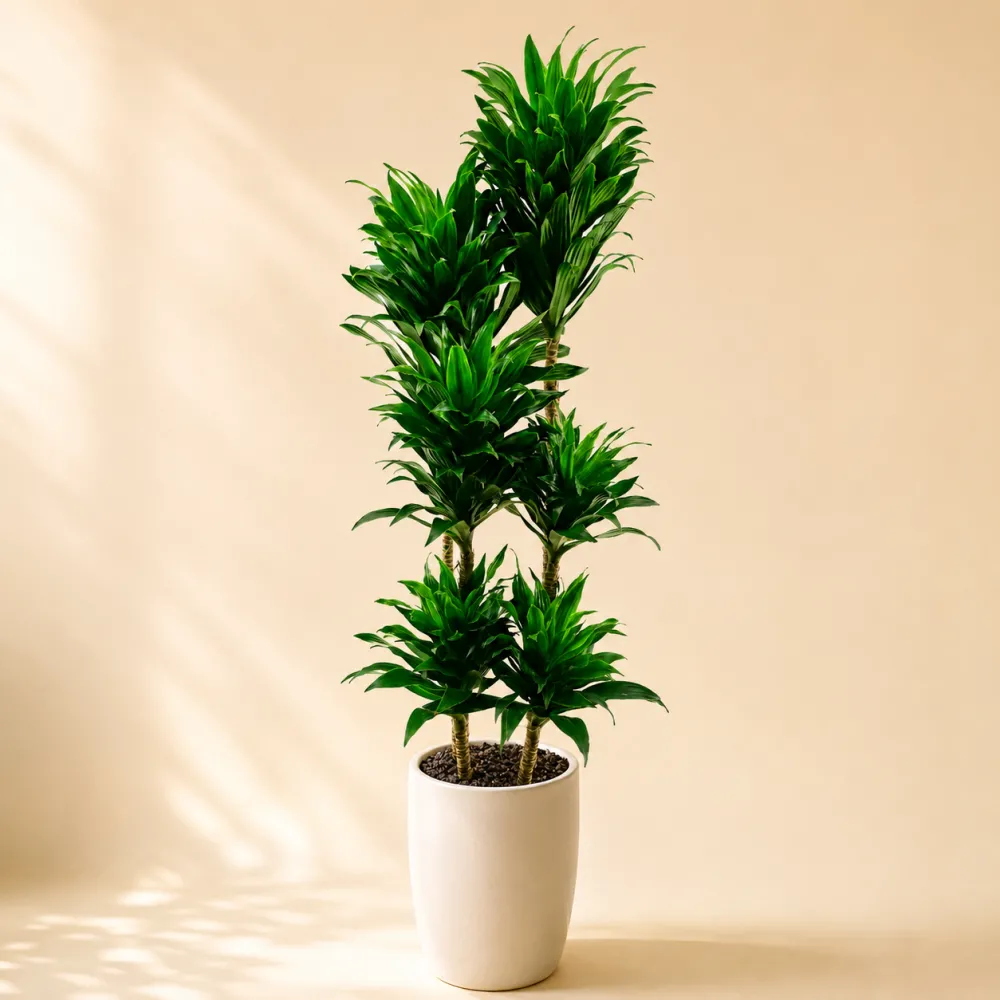
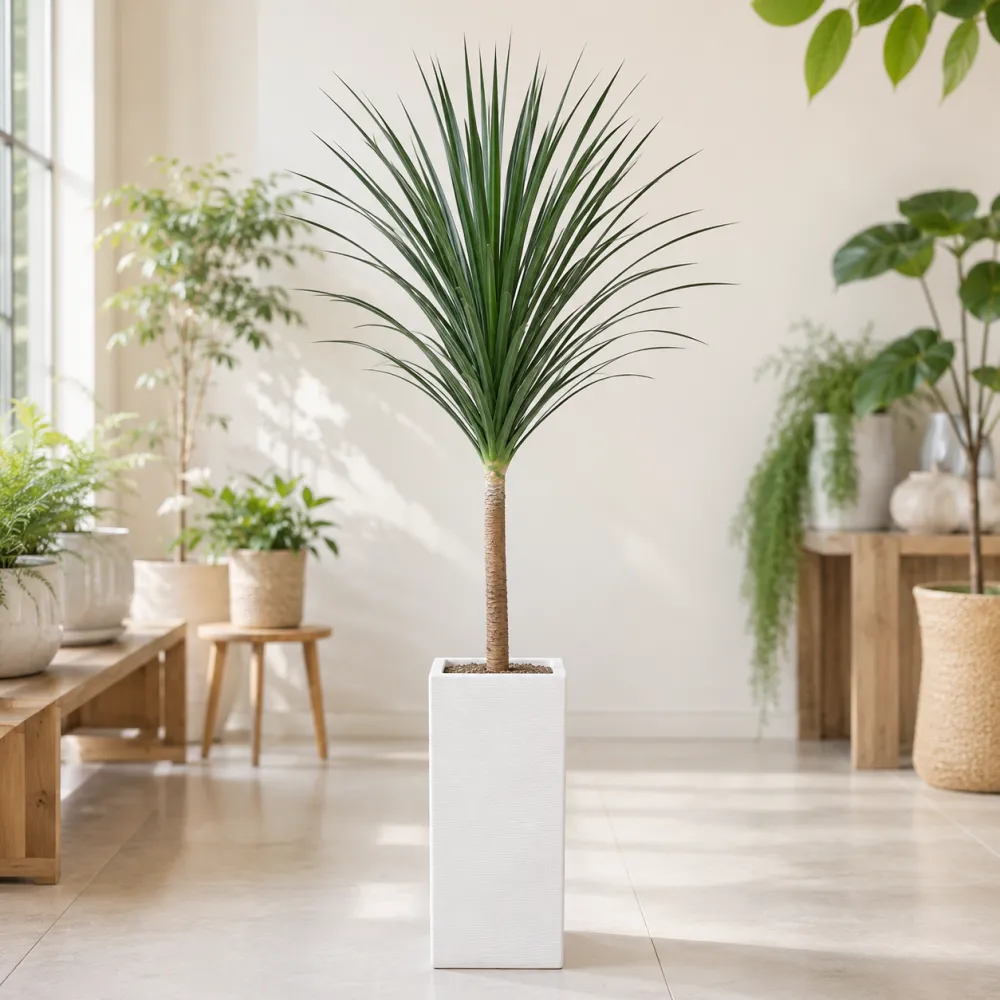
The image on this listing is a real photograph of a real specimen of this plant, at this grade, in this pot. What arrives at the door will be a sibling — same species, same nursery grade, same height class, genuinely different in its details.
One will branch at seventy centimetres, another at ninety. One will carry three crowns, another two fuller ones. One leans slightly, because it spent two years turning toward a particular window in a greenhouse in Gyeonggi-do.
This is not a defect and it is not a disclaimer we are hiding in small print. It is the nature of the object.
You are not buying a product with a photograph. You are buying an individual, and the photograph is its cousin.
This is exactly why every order we send gets photographed at the door, unstaged and unretouched, and why that photograph is sent to the person who paid rather than only to the person who received.
For customers ordering from another country it is the only way to close the loop. You did not choose this specific plant. You cannot see the room it went into. The photograph is the one moment where what you imagined and what actually happened are laid side by side.
Occasionally the plant that arrives is better than the catalogue image. Occasionally it is simply different. We would rather show you either than pretend the question does not exist.
To be concrete, because vagueness here is how customers get disappointed:
What is not guaranteed is the exact branching, the exact lean, or the exact number of crowns, because no honest seller of large plants can guarantee those.
There is a reason people photograph their plants and not their appliances.
A mass-produced object is interchangeable by design — replace it and nothing is lost. A plant is not. The one in the corner of that office has a specific history: a bend from a particular window, a scar where a leaf was knocked off during a move, a crown that came in thicker after a good summer.
Given time, those accidents become the reason the thing is loved. Nobody is attached to a chair because of the year it had.
As with all the dracaenas in this collection: bright indirect light, and water only once the top several centimetres of soil have dried completely. Overwatering is the usual killer. Brown papery leaf tips point to tap water minerals or dry air rather than thirst. Lower leaves drop as the trunk develops, which is normal.
Toxic to cats and dogs if chewed.
If you need an object that matches its picture exactly, buy something that was manufactured. If you want something that will be specifically, unrepeatably theirs, this is the trade you are making — and we will show you what actually arrived.
It will be the same species, grade and height class in the same pot, but it will be an individual — branching, lean and crown count vary from specimen to specimen. No honest seller of large plants can promise otherwise. We photograph the actual plant at the door and send you that image.
They are the same species at different size and form grades, priced accordingly. B is the smaller of the two. If you want a specific height or shape for a particular space, message us before ordering and we will tell you what is in stock that week.
Tell us with a photograph. Plants with damaged crowns, significant leaf loss or pests are meant to be caught before dispatch, but if something goes wrong in transit we will replace it. The delivery photograph we send you is your record of the condition it arrived in.
Delivered and set in place by hand anywhere in Korea, then photographed exactly as it arrived so you can see the individual specimen that went into the room. Handwritten card or ribbon in English or Korean at no charge.
Published September 4, 2026 · by Arrive in Bloom · Flower Editor