FLOWER STORIESPlants & Orchids
Moth Orchid Care After the Blooms Fall: How to Get Flowers Again
Before you throw away a moth orchid you loved just because its flowers have dropped, check where to cut the flower spike
Before you throw away a moth orchid you loved just because its flowers have dropped, check where to cut the flower spike
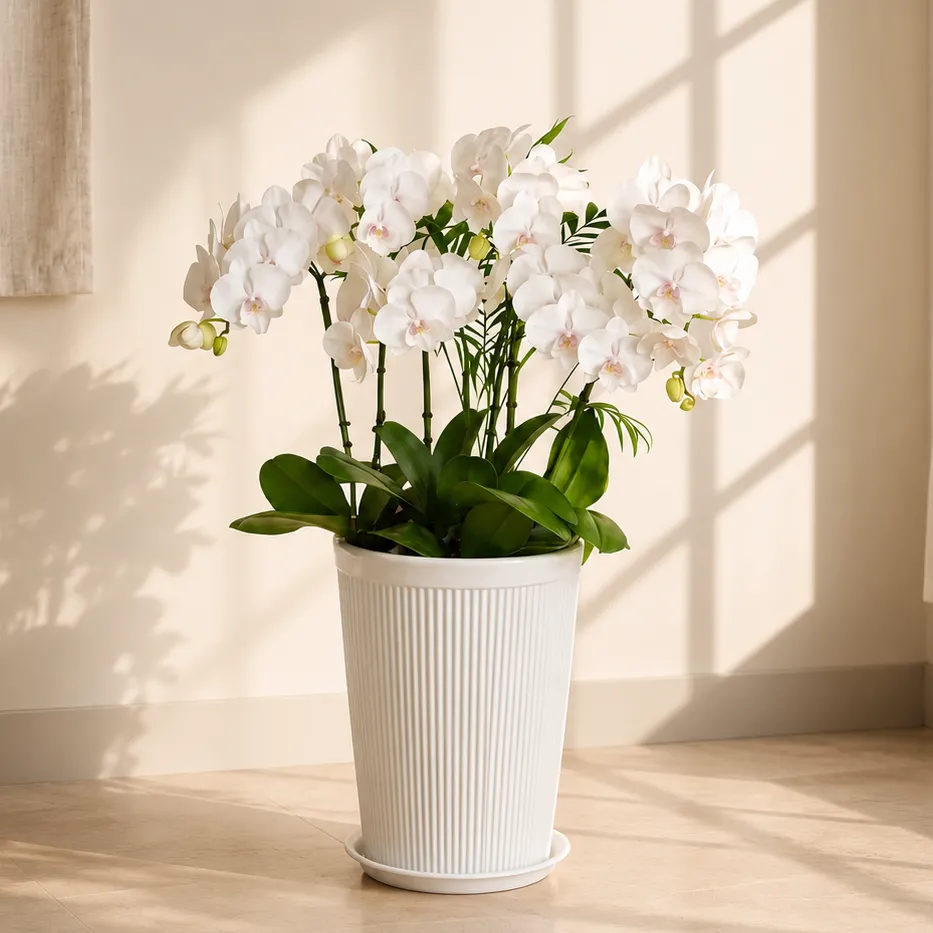
Once its flowers drop, a moth orchid is left with just a bare stem and can look finished, so it is easy to assume it has reached the end of its life. But the flowers are simply the result of strength the plant has stored up over the year, and if the leaves and roots are healthy, the plant itself is still very much alive.
Start by checking its condition. If the leaves are thick and glossy, and the root tips are green or silvery, the plant is in fairly good health. If, on the other hand, the leaves are soft and wrinkled, or the roots have turned brown and mushy, that is a sign of a watering problem, and tidying the roots comes before worrying about flowers.
After the flowers fall, an orchid usually needs a resting period of a few months before the next flower spike appears. Rather than expecting it to bloom again straight away, it helps to think of this as giving the plant time to regain its strength.
One more thing: the longer a pot has held its flowers, the more energy the spike has spent. Once every petal has fallen, it is kinder to the plant to move on to the next step rather than drag things out.

The colour of the spike is your guide. If it is still green, cut about one or two centimetres above the second or third node from the bottom. If a side spike grows from the bud at that node, you may see flowers again fairly quickly, even if they are smaller than the first time.
If the spike has turned yellow or begun to dry out brown, it will not produce any more flowers, so cut it right down close to the roots. Leaving a drying spike in place only wastes the plant's nutrients.
Use scissors or a knife that has been wiped clean, and dabbing a little cinnamon powder on the cut helps reduce the risk of mould infection. If you are using the same scissors on several pots, wipe them between each one.
After cutting, water as usual, but do not let water collect between the leaves. Water that sits there easily leads to rot, and it is safer to keep water away from the cut until it has dried.
Aiming for a side spike is only worth trying when the plant is strong enough. If it has fewer than four leaves or looks weak, it is better to cut the spike right down at the base so the plant can put its energy into recovering.
A moth orchid grows attached to trees in the wild, so it dislikes having its roots wet all the time. Water thoroughly only when the moss or bark has dried out completely and the roots have turned silvery, and tip away any water that collects in the saucer straight away. It varies with the season, but this is usually about once a week.
For light, a bright windowsill with a curtain filtering the sun is best. Direct midsummer sun will scorch the leaves, while in a spot that is too dark the leaves just grow longer and no flower spike appears. Daytime temperatures of around 18–25°C are comfortable, and a spike is more likely to appear if the plant meets slightly cooler nights in autumn.
Humidity of around 50–70 per cent suits it well. In winter, when heating dries the air, a bowl of water placed near the pot can help. We would not recommend misting the leaves directly, though, as this can leave marks or cause rot.
From the time the flowers fall, feed with a liquid fertiliser diluted weakly, every two weeks to a month. A strong mixture damages the roots, so it is safer to dilute it more than the amount stated on the packaging. In winter, keep it away from windowsills where cold draughts reach it.
The table below sums up everything so far by condition. Find the row that is closest to your pot and follow the steps in order.
| Condition of the pot | What to do | How long to wait |
|---|---|---|
| Spike is green and the leaves are strong | Cut above the second or third node from the bottom | A few weeks to a couple of months |
| Spike has dried brown | Cut right down close to the roots | A few months until a new spike |
| Roots are soft and brown | Cut away the soft roots and repot in fresh moss | Until the roots have settled in |
| Leaves are limp and wrinkled | Check how often you water and make sure there is airflow | Until the leaves plump up again |
The best time to repot is just after the flowers fall, and once every two years is usually enough. A pot that is too large keeps the moss wet for too long and harms the roots, so choose a clear pot that suits the size of the roots, which also lets you see their condition with your own eyes.
To clean the leaves, dampen a soft cloth with water and wipe them gently, one at a time. Dust that builds up gets in the way of the leaves taking in light, and it also makes pests and diseases harder to spot.
Once a new spike starts to rise, do not turn or move the pot often. The flower buds grow towards the direction of the light, so changing its position can make the spike bend and the buds drop.
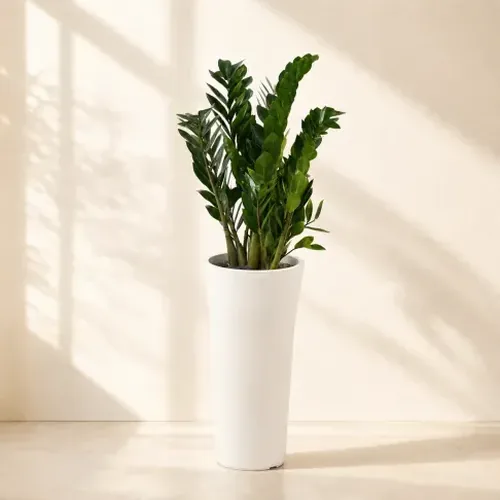
Arrive in Bloom (이름꽃) delivers flowers nationwide at prices that include delivery, and we send you a photo of the real arrangement after delivery. Same-day delivery applies to orders placed before 5 pm and may vary by area and product. If you need a pot plant, we also have a ZZ plant in a pot for 47,000 won.
It is best to cut once all the petals have fallen. If the spike is green, cut above the second or third node from the bottom; if it has dried brown, cut close to the roots.
Water thoroughly once the moss or bark has dried out completely and the roots have turned silvery. It varies with the season, but this is usually about once a week, and any water collecting in the saucer should be tipped away straight away.
It depends on the plant's condition and its surroundings, but it usually takes a few months. A side spike is comparatively quick, while a spike cut right down at the roots takes longer to be replaced by a new one.
We deliver anywhere in the country at prices that include delivery, and we send you a photo of the real arrangement afterwards. Same-day delivery applies to orders placed before 5 pm.
Published July 20, 2026 · Updated October 8, 2026 · by Arrive in Bloom · Flower Editor