FLOWER STORIESFlower Stories
Flowers Beside the Memorial Portrait: A Quiet Way of Showing Care
Why white flowers and a few words can comfort
Why white flowers and a few words can comfort
Maybe you have just received a text announcing a death. You are looking at the screen, unsure whether to send a wreath or what to write on its ribbon. This article starts from that hesitation.
There is already plenty online about what chrysanthemums symbolize and what wreaths cost. This article looks at what flowers actually do at a Korean funeral, and what you can leave out because of that.
In the 빈소 (binso, the memorial room at a funeral hall), the bereaved family hears the same words of comfort many times over. White is the color that chooses to add nothing to all those words.
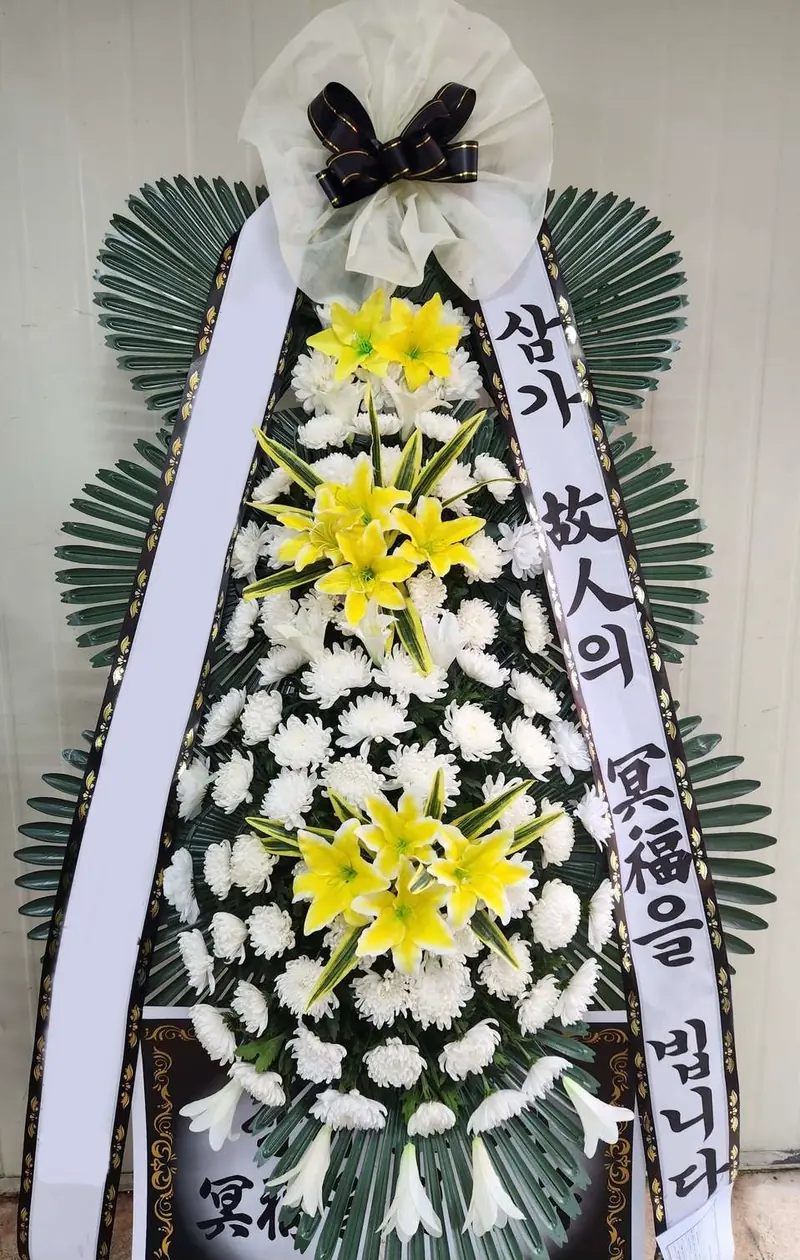
In Korean funeral tradition, white has long been the color of mourning clothes. The feeling of the days when mourners wore 소복 (sobok, plain white mourning garments) has carried over to today's white chrysanthemums and white lisianthus.
A little pale green or soft purple among the white flowers is fine. There is no need, though, to change the mood with red or bright yellow.
When the colors are quiet, people looking at them tend to say less as well. At a funeral, white does not explain the grief. It stays beside it.
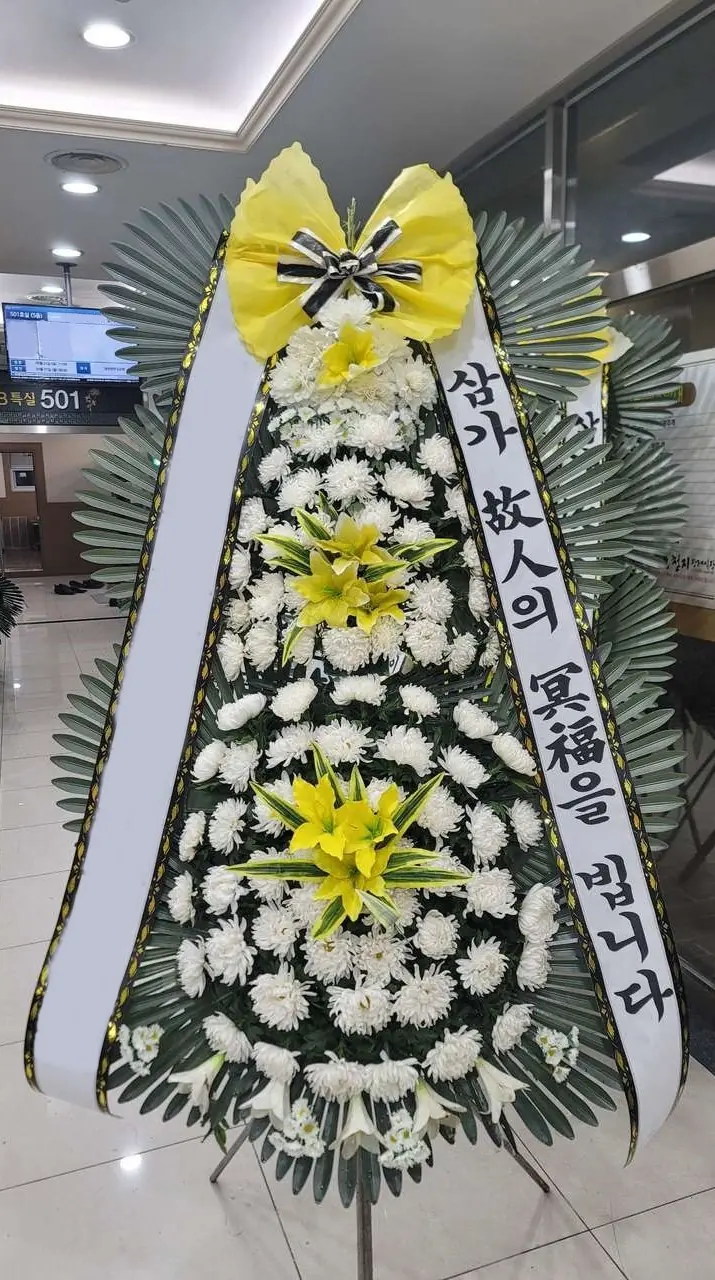
A 근조화환 (geunjo hwahwan, standing condolence wreath) usually stands at the entrance or in the hallway, not inside the memorial room. Mourners read the names on the ribbon before they notice the flowers, so the wreath quietly shows outsiders how the sender knew the deceased.
For that reason, the sender's ribbon should clearly show the company name, department, job title and name. After the funeral, this one line is what helps the family remember who was there for them.
On the condolence ribbon, shorter is better. A short, set phrase signals restraint in itself, and it is easier on the family to read than a long sentence.
| Ribbon message | When it fits | Notes |
|---|---|---|
| 근조 (geunjo, “with deep condolences”) | When you don't know the family's religion | Two characters are enough |
| 삼가 고인의 명복을 빕니다 (“We pray for the peace of the departed”) | General condolences | Suitable from individuals and companies alike |
| 극락왕생을 기원합니다 (“We pray they are reborn in paradise”) | Buddhist funerals | Use only after confirming the family's religion |
| 주님의 위로와 평안을 빕니다 (“May the Lord grant comfort and peace”) | Christian funerals | Often used in place of the 명복 (peace of the departed) phrase |
If you don't know the family's religion, choose 근조 or 삼가 고인의 명복을 빕니다. You don't have to compose something new for your sympathy to come through.
When you enter the memorial room, give the chief mourner a slight bow, then go to the front of the memorial portrait. Hold the flower near the bottom of the stem with your right hand and support it lightly with your left.
When you lay it down, the flower head usually points toward the portrait, because you are handing the flower to the deceased. Practice can differ from one funeral hall to another, so you can follow the direction the person before you used.
After laying the flower, pause for a moment of silence or bow, then exchange bows or a nod with the chief mourner. For words of comfort, 삼가 조의를 표합니다 (“Please accept my condolences”) is enough. Bowing your head without speaking is not considered impolite either.
Most memorial rooms provide flowers for the 헌화 (heonhwa, flower offering), so you don't need to bring your own. Remembering the person for the few seconds it takes to set the flower down is all the offering asks.
For wreath options and the same-day delivery cutoff (5 p.m.), see the Arrive in Bloom condolence wreath page.
Write the company name, department, job title and name, in that order, so the family can tell who sent it. If you are sending as an individual, your name alone is fine.
근조 (“with deep condolences”) or 삼가 고인의 명복을 빕니다 (“We pray for the peace of the departed”) are the safest choices.
Usually the flower head points toward the memorial portrait. If the funeral hall gives its own instructions, follow those.
Arrive in Bloom delivers same day on orders placed by 5 p.m. Orders placed after that are delivered after 10 a.m. the next day. The three-tier standing condolence wreath is 59,000 won, including delivery anywhere in Korea.
Arrive in Bloom has standing condolence wreaths made by partner ateliers across Korea, and we handwrite your ribbon message for you. After delivery, we send you an unedited photo of the actual wreath.
Published October 2, 2026 · by Arrive in Bloom · Flower Editor