FLOWER STORIESFlower Stories
The Tulip: Spring's First Confession
A spring bulb that carries a declaration of love, the story of the tulip
A spring bulb that carries a declaration of love, the story of the tulip
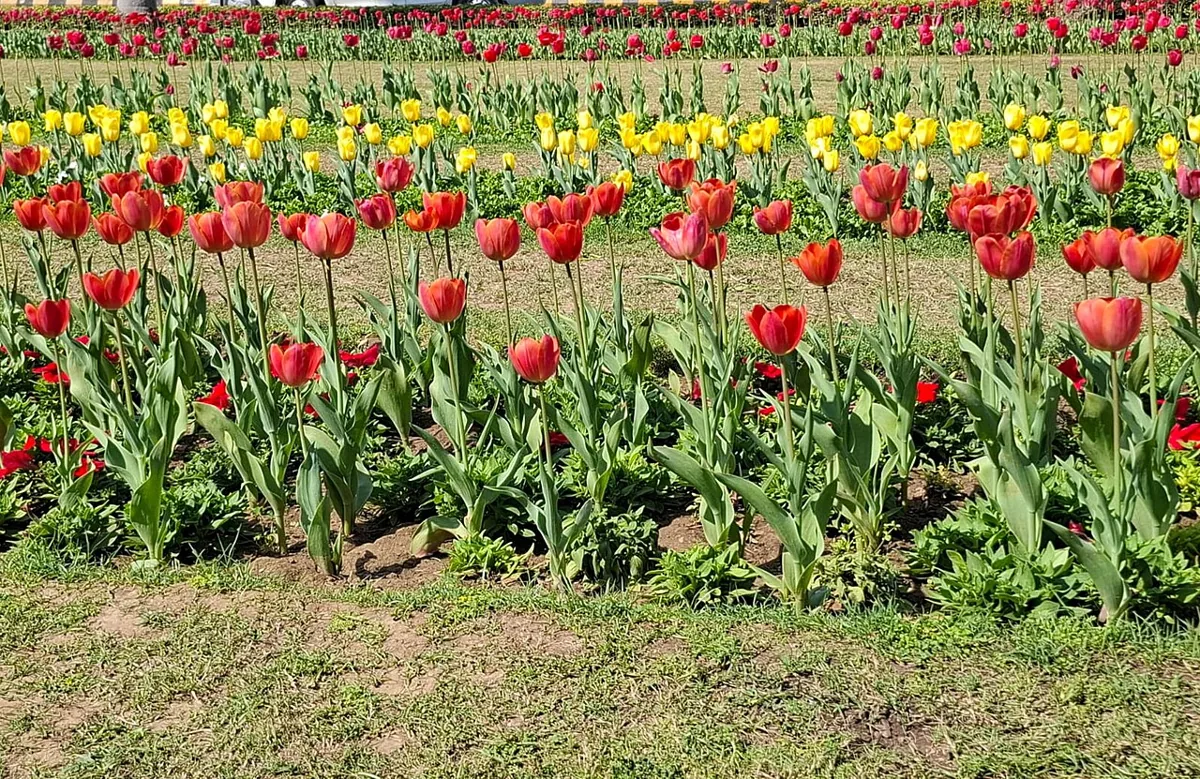
There are days when you doubt whether spring has truly arrived. The wind is still cold, the sky lukewarm. On a day like that, if you pass a flower shop and catch sight of a bunch of tulips, your heart knows before you do. Spring has come. The tulip is the flower that calls spring first. If plum and cornelian cherry announce spring from the tips of branches, the tulip sets a spring you can hold in your hands right down before you.
The tulip is a flower raised up in spring by bulbs that were planted in autumn and endured the cold underground all winter. It usually peaks between March and April, and each bloom takes the neat, composed shape of a cup. It does not spill open in gaudy abundance; that restraint, closed and then slowly parting, is the tulip's grace.
There is a reason the tulip is called spring's signature bulb flower. Having spent the cold season underground, the bulb pushes up its stem the moment the spring sun touches it. That pace is more decisive than other spring flowers, so when tulips reach the market, people finally feel that the season has turned. To say it calls spring is no exaggeration. The tulip truly brings spring to our side before anything else.
The tulip's meaning is a 'declaration of love.' That is why tulips are so often placed where a heart is offered for the first time. What is interesting is that even among tulips, the texture of that confession changes with color. A red tulip means a confession of love, a yellow tulip a cheerful heart, a purple tulip eternal love, and a white tulip forgiveness.
When you choose a bunch of tulips, choosing the color is choosing what words to offer. For someone you are confessing to for the first time, you reach for red; for someone who has stayed by your side for a long time, purple; and when you want to mend a distance that grew between you, white. The tulip writes its sentences in color.
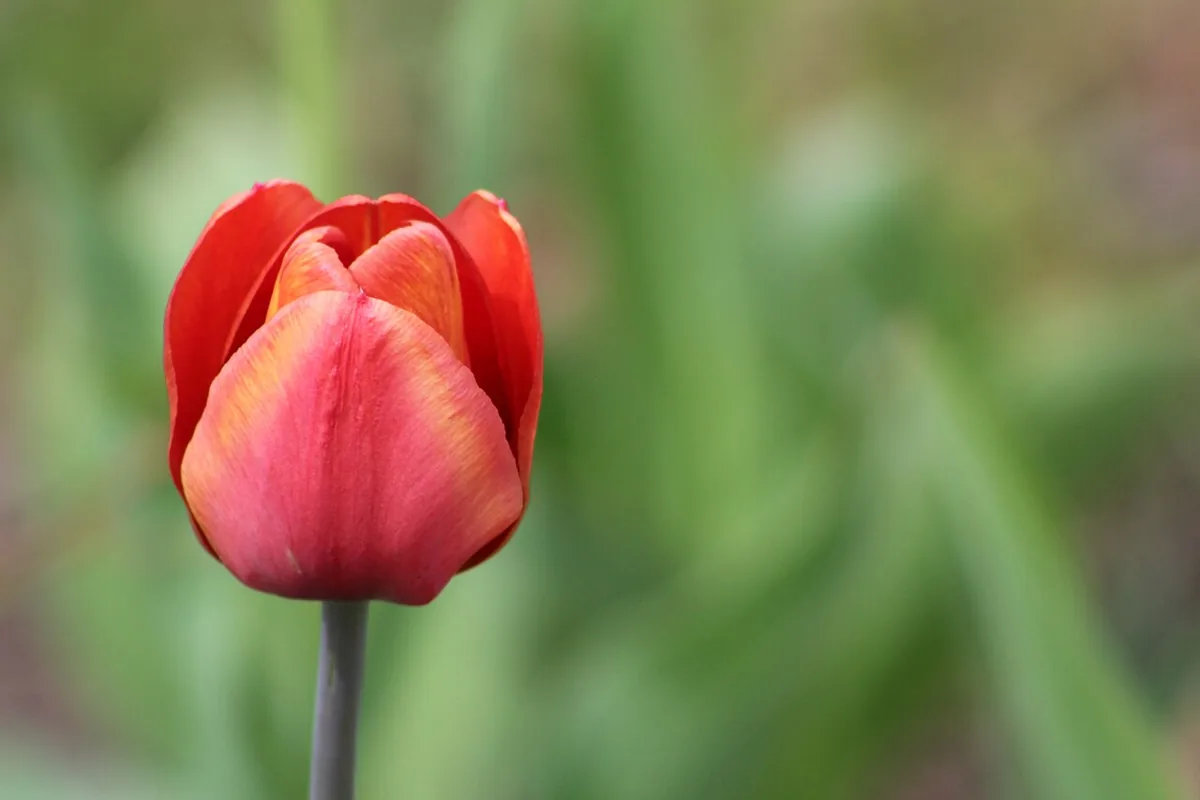
The tulip has a trait rarely seen in other cut flowers: even after it is placed in a vase, the stem keeps growing. Within a few days it may stretch nearly a hand's width taller, and the stem slowly bends toward the light. A tulip set by the window, found turning its head toward the glass before you noticed, is a quiet joy known only to those who have kept one.
Because of this nature, the tulip feels like a flower that is alive and moving. It is not a mounted, preserved beauty but a living thing that shifts its expression a little each day. If you would rather not watch the stem grow, it is better to cut it short in a shallow vase; if you want to enjoy the change, set it long in a generous one.
Tulips are sensitive to heat. They last far longer in a cool place. Keep them away from direct sunlight and the warmth of heaters, and set them in a cool spot. Rather than filling the vase deep, add only enough water to cover the lower stems and change it often; trimming the stem ends at an angle helps them draw water well.
Do not be alarmed if the petals open a little. The tulip is a flower that responds to light, parting by day and closing again by night. Watching that opening and closing is itself a reason to bring a tulip home.
Thanks to its neat, composed beauty, the tulip suits the occasions of new beginnings and confessions. Graduation and a first day of school, a first day at work, the day you finally take out a feeling long put off. As a greeting for such days, few flowers rival the tulip. Quietly, yet clearly, it carries the heart.
Before its name was called it was simply one bloom of spring, but the moment it is offered to someone, the tulip becomes a confession that belongs to that person alone.
If you have decided to share what is in your heart, it matters that it arrives in time. Arrive in Bloom delivers the tulips of spring nationwide, same day, before each region's cutoff. You can order anytime, 24/7, and we share real, unretouched delivery photos. Just as spring is brief, a confession has its season too. At flowername.co.kr, try offering the spring that arrives first.
The tulip's best-known meaning is a 'declaration of love.' Each color carries its own message: red means a confession of love, yellow a cheerful heart, purple eternal love, and white forgiveness.
The tulip is the signature bulb flower of spring, usually reaching its peak between March and April. Bulbs planted in autumn endure the winter and bloom when spring arrives.
Tulips dislike heat, so they last longer in a cool spot away from direct sunlight and heating. Fill the vase only enough to cover the lower stems, change the water often, and trim the stem ends at an angle.
Yes, it is. Even after being placed in a vase, cut tulips keep growing and gently bend toward the light. It is the natural change of a living flower.
At flowername.co.kr, send tulips that carry a declaration of love with nationwide same-day delivery. Order before your region's cutoff time for same-day arrival, with ordering available 24/7. We share real, unretouched delivery photos. Inquiries: 1666-6584.
Published May 28, 2026 · by Arrive in Bloom · Flower Editor