FLOWER STORIESGuides
Sending Flowers Home After a Hospital Discharge: What to Consider
If you missed the hospital visit, here is how to send flowers to their home after discharge
If you missed the hospital visit, here is how to send flowers to their home after discharge
If you have ever carried flowers to a hospital visit only to be turned away at the ward entrance, a discharge is your second chance. Flowers going to a home are different from flowers left in a hospital lobby, though. Keep in mind first that the recipient is still a patient, and you will make fewer mistakes.
Discharge day is for unpacking, sorting out medication and catching up on sleep. If flowers arrive that day, taking the courier's call, answering the door and finding a place to put them all become chores.
Two to three days after discharge is easier on the recipient. By then the relief of being home has settled and the visitors have thinned out, so a single arrangement is a welcome sight.
Arrive in Bloom's same-day delivery cutoff is 5 p.m., and orders placed after that are delivered from 10 a.m. the next day. Deliveries run between 8 a.m. and 8 p.m., so if you want the courier to avoid nap time, it is safest to say so in the order note. The courier calls before arriving, so the recipient's contact number must be a Korean number.
There are three criteria: a light scent, no need to change the water, and not much space taken up. Strongly scented flowers such as lilies or freesias can be hard to bear for someone still dealing with nausea.
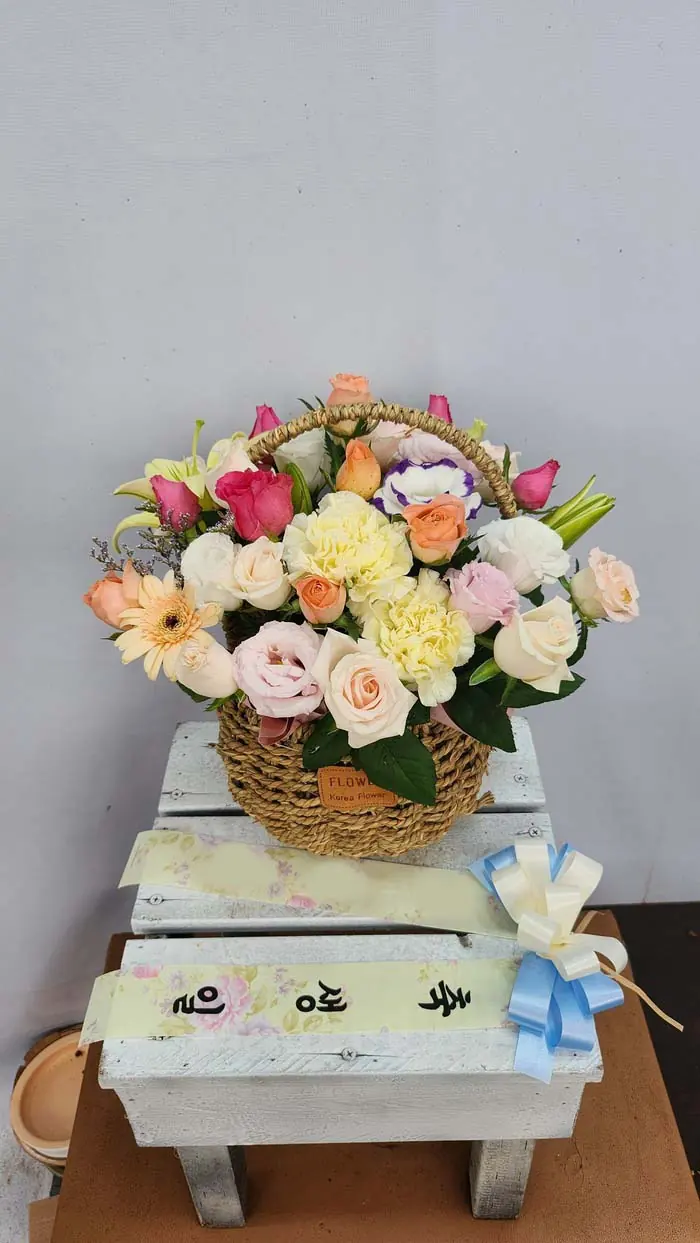
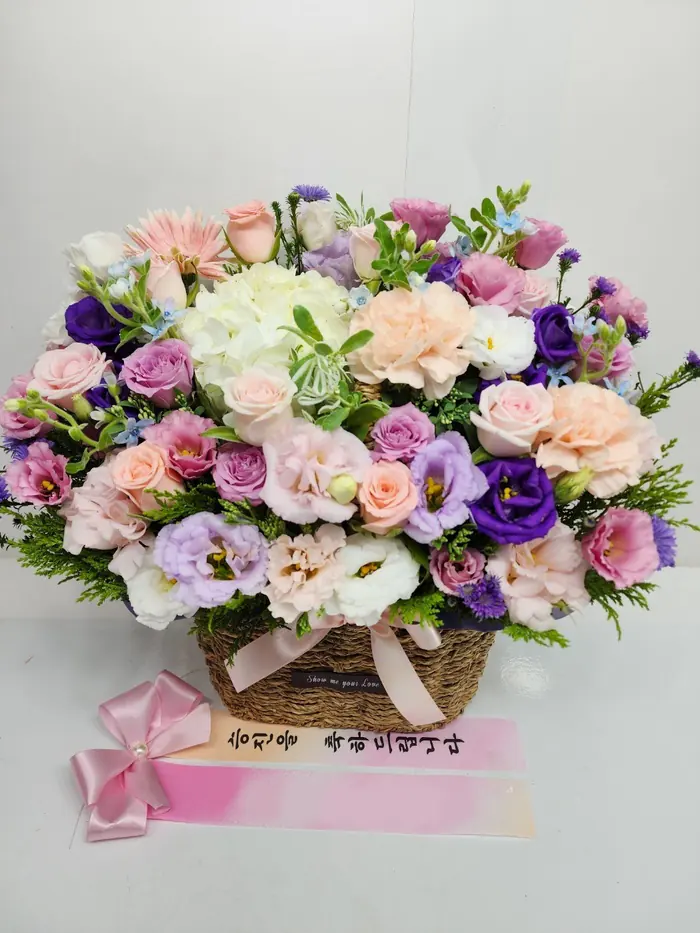
A bouquet means finding a vase, trimming the stems and changing the water as soon as it arrives. If the patient has to do this themselves, the congratulations turn into homework. A flower basket, with the stems set in water-soaked floral foam, can be left as it is, and a small potted plant only needs watering once a week.
| Type | What to do after receiving it | Scent | Best for |
|---|---|---|---|
| Flower basket | Nothing, just top up the foam with water now and then | Adjustable depending on the arrangement | Most discharge occasions |
| Small potted plant | Water once a week | Almost none | When you want it to last |
| Preserved or dried flowers | Nothing | None | When fresh flowers must be avoided |
| Bouquet | Prepare a vase, change the water | Strong, depending on the variety | When a caregiver is there to help |
Keep the size small too. Something that fits on a bedside table or one end of the dining table is enough. Anything that has to sit on the living room floor becomes clutter in a home.
After chemotherapy or a transplant, patients are sometimes told to avoid fresh flowers and plants in soil, because of pollen and the bacteria that grow in standing water. In that case it is better to choose preserved or dried flowers instead of fresh ones, or to switch to a gift that is not flowers at all.
If you are not sure, a one-line question to the caregiver is the fastest way to find out. Asking whether flowers are okay is not a burden on their end. If the person lives alone, choose something even smaller and let them know before it arrives.
Keep the card short. "Home is the best place to be. Rest and take your time." "No need to reply. We'll see each other another time." Leave out anything that asks about their recovery or urges them to get better quickly. A sentence that creates no obligation to reply is the most comfortable kind for a patient.
Once the delivery is complete, Arrive in Bloom sends you an unedited photo of the actual arrangement, so you do not need to call the recipient to check. You can browse the small flower baskets and potted plants for home delivery here.
Two to three days after discharge is easier on the recipient than the day itself. Discharge day is taken up with unpacking and rest, and a few days later the visitors have gone, so the flowers are a welcome sight.
A flower basket. The stems sit in water-soaked floral foam, so there is no vase to prepare and no water to change. A bouquet has to be trimmed and arranged by the recipient.
Patients with a weakened immune system are sometimes told to avoid fresh flowers and plants in soil. Check with the caregiver first, and if that is difficult, switching to preserved or dried flowers is the safe choice.
Short sentences that do not call for a reply work best. Avoid asking about their recovery or urging them to get better quickly.
We have gathered flower baskets and small potted plants that are lightly scented and need little care. After delivery, you can confirm arrival with a photo of the actual arrangement.
Published October 12, 2026 · by Arrive in Bloom · Flower Editor