FLOWER STORIESPlants & Orchids
Peace Lily: The White Bloom That Freshens the Air
What makes the peace lily special, how to look after it, and first aid if a pet nibbles the leaves
What makes the peace lily special, how to look after it, and first aid if a pet nibbles the leaves
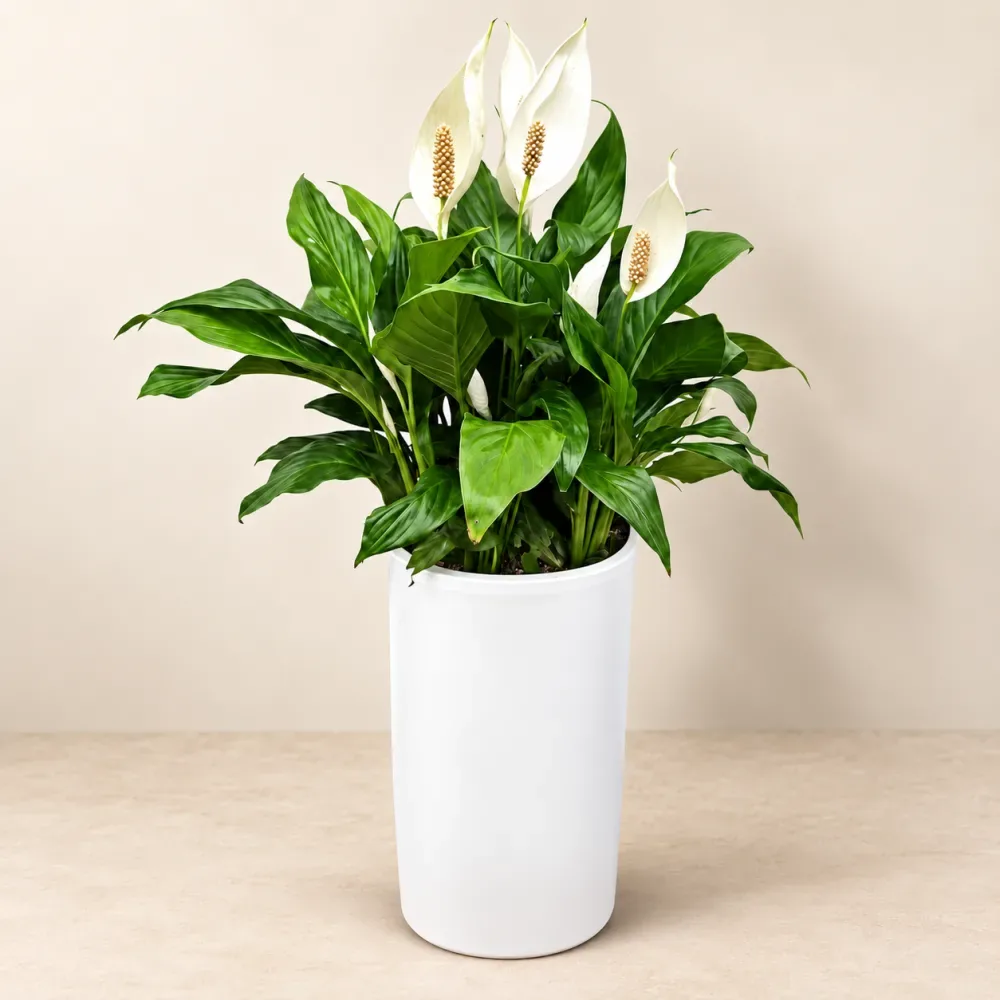
The peace lily (spathiphyllum) is an evergreen perennial in the arum family, native to the damp, shaded forests of Central and South America. It is a well-loved houseplant, known for the white blooms that rise above its deep green leaves.
What we call the white petal is actually a modified leaf known as a spathe. The true flowers are the tiny ones clustered along the rod-shaped spadix at its centre. The spathe outlasts the flowers, so you can enjoy its white shape for several weeks.
In time, the spathe turns pale green and then fades. When that happens, cut the stalk back close to the base, so the plant's energy goes to a new stalk and you can look forward to another bloom.
Height varies by variety, from small ones of around 30 centimetres to large ones of over a metre. The small ones suit a desk, while the large ones look right on a living-room floor. With such broad leaves, dust settles easily, so a gentle wipe with a damp cloth now and then helps the plant photosynthesise, too.
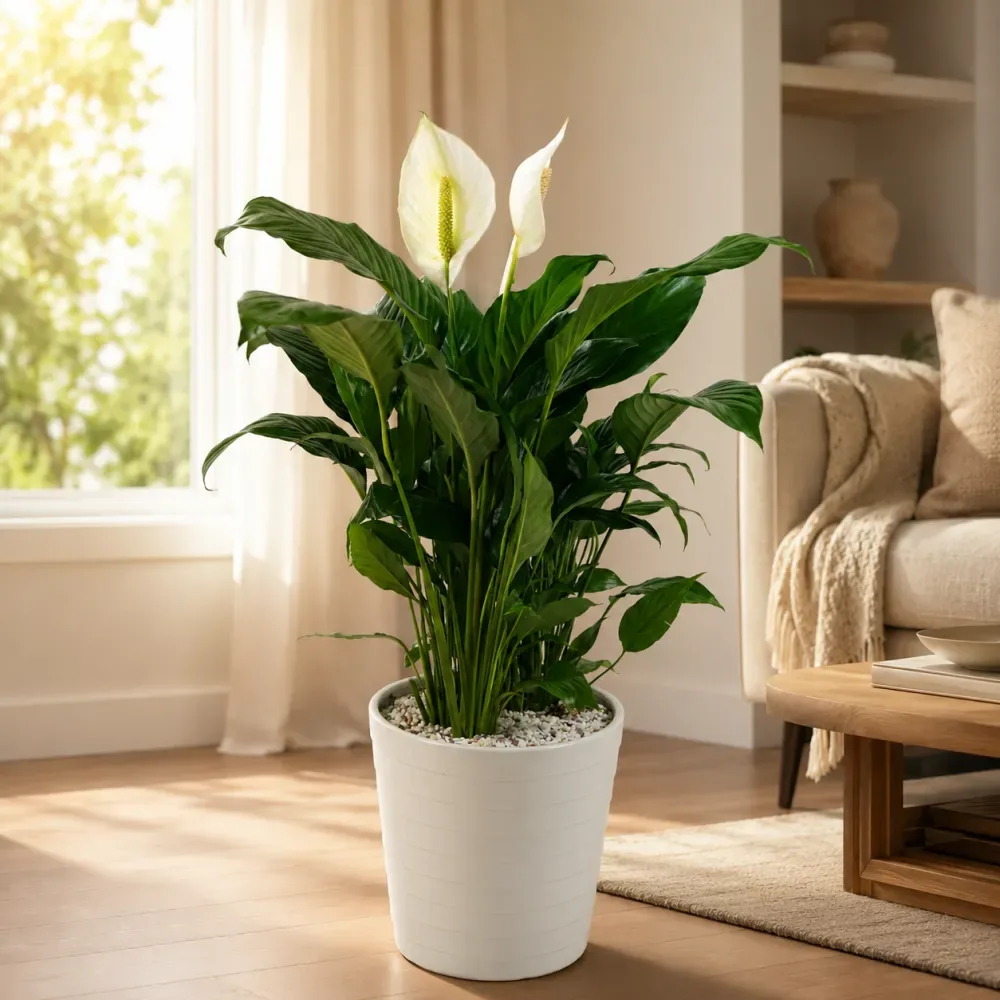
A bright spot out of direct sunlight is ideal. Strong sun scorches the leaves, while too little light gives you plenty of foliage but few flowers. It grows best at roughly 18–25°C, and in winter please keep it from dropping below 10°C.
When the top of the soil feels dry, give it a thorough drink all at once, and tip away any water that collects in the saucer. If it is thirsty the leaves will droop, but they usually perk up quickly after watering. Soil that is always wet, on the other hand, will rot the roots, so take care.
Feed it a weak solution once a month from spring to autumn, when it is growing, and let it rest over winter. If you leave tap water to stand for a day before using it, you may find the leaf tips brown less.
Brown, dry leaf tips are common, and there is more than one cause. Use the table below to work through the symptoms.
| Symptom | Main cause | What to do |
|---|---|---|
| Leaf tips turn brown and dry | Dry air, too little water | Mist the leaves and check how often you water |
| Leaves turn yellow | Overwatering, poor root condition | Let the soil dry out and check the drainage |
| No flowers | Not enough light | Move to a spot with bright, indirect light |
| Leaves scorch and turn white | Direct sunlight | Move behind a curtain |
Once the roots fill the pot, repot into one size larger every year or two. It is kinder to the plant to repot in spring or early summer, after the flowers have faded.
The idea that the peace lily cleans the air comes from research carried out in sealed test chambers in the 1980s. In those experiments, the plants appeared to reduce some volatile compounds.
However, a real living room or office is far larger than a test chamber and is aired often. It is hard to say that one or two pots will make a noticeable difference to indoor air, and they cannot replace ventilation. It is more accurate to treat the benefit as a small extra.
Even so, as a broad-leaved plant that releases moisture, it adds a little humidity to dry rooms, and its greenery has a calming look of its own. It is best thought of as a foliage plant that lifts the mood of a room rather than an air purifier.
For fresher indoor air, opening the windows once or twice a day is the more reliable way.
The leaves and stems of the peace lily contain calcium oxalate crystals. If chewed or swallowed, they can cause a stinging mouth and throat, drooling, vomiting and swelling around the mouth. If you have small children, cats or dogs, keep the plant out of reach.
For first aid, begin by wiping out any bits of plant left in the mouth and rinsing the mouth with clean water. If they can swallow, it is fine to let them drink a little water or milk. Please do not try to make them vomit.
If breathing seems difficult, the swelling is severe or the symptoms continue, contact a doctor or vet straight away. It helps to tell them the name of the plant, how much was eaten and when. After touching the sap, wash your hands and avoid rubbing your eyes.
Arrive in Bloom (이름꽃) delivers flowers across the country, and our prices include delivery. After delivery we send you a photo of the real arrangement, and we write your ribbon and card message by hand at no charge. For a potted-plant gift, we have a ZZ plant available for 47,000 won.
First press a finger into the soil to check whether it has dried out right through. If it has, give it a thorough drink and the leaves usually stand up again within a day. If the soil is wet and the leaves still droop, the cause may be overwatering or a problem with the roots.
The most common cause is too little light. Keep it out of direct sun but move it somewhere with bright, indirect light, and give it a weak feed once a month while it is growing. Flowers can also dwindle if the pot is too small and the roots are packed in.
The leaves and stems contain calcium oxalate crystals, so chewing them can cause a sore mouth, drooling and vomiting. Rinse the mouth with water and keep an eye on your pet, but if they have trouble breathing or the symptoms continue, contact a vet. If possible, it is safer to keep the plant where pets cannot reach it.
We deliver flowers across the country and send you a photo of the real arrangement after delivery. Your card message is handwritten at no charge.
Published July 25, 2026 · Updated October 8, 2026 · by Arrive in Bloom · Flower Editor