Phalaenopsis vs. Cymbidium — Two Orchids, Two Expressions
The trim, butterfly-like Phalaenopsis and the full, abundant Cymbidium. We read these two orchids side by side — their looks and impression, their gifting use, and their care.
花Arrive in Bloom · Flower Editor · June 20, 2026 · 5 min read
A real delivery photo by Arrive in Bloom (unstaged, unretouched)
Anyone receiving an orchid for the first time tends to ask the same question. Is this a Phalaenopsis or a Cymbidium? Both are cultivated orchids, both appear at formal occasions, yet look closely and the two wear quite different expressions. One descends in a single trim line, like a butterfly at rest; the other swells with abundance, many blooms strung along a single spike.
When Arrive in Bloom recommends an orchid for an opening or an inauguration, the first thing we ask is not the price but the mood of the room. Depending on what kind of feeling you want to place in a space, Phalaenopsis and Cymbidium offer entirely different greetings.
Where the butterfly alights: Phalaenopsis
Phalaenopsis is also known as the moth orchid. Its blooms resemble a butterfly with its wings spread, settling gently down — hence the Korean name hojeop (胡蝶), the butterfly orchid. Along one upright spike, blossoms of the same size open in turn, drawing a clean, uncluttered line.
That neatness is what defines its impression. Without any loud display, it is unmistakably refined. So Phalaenopsis became the first name that comes to mind among orchids for congratulating an opening, a promotion, an inauguration. A single white Phalaenopsis set by the entrance of a newly opened office, or beside the desk of its head, has by now become a kind of etiquette in itself.
Arrive in Bloom product photo — yellow cymbidium
Many blooms on one spike: Cymbidium
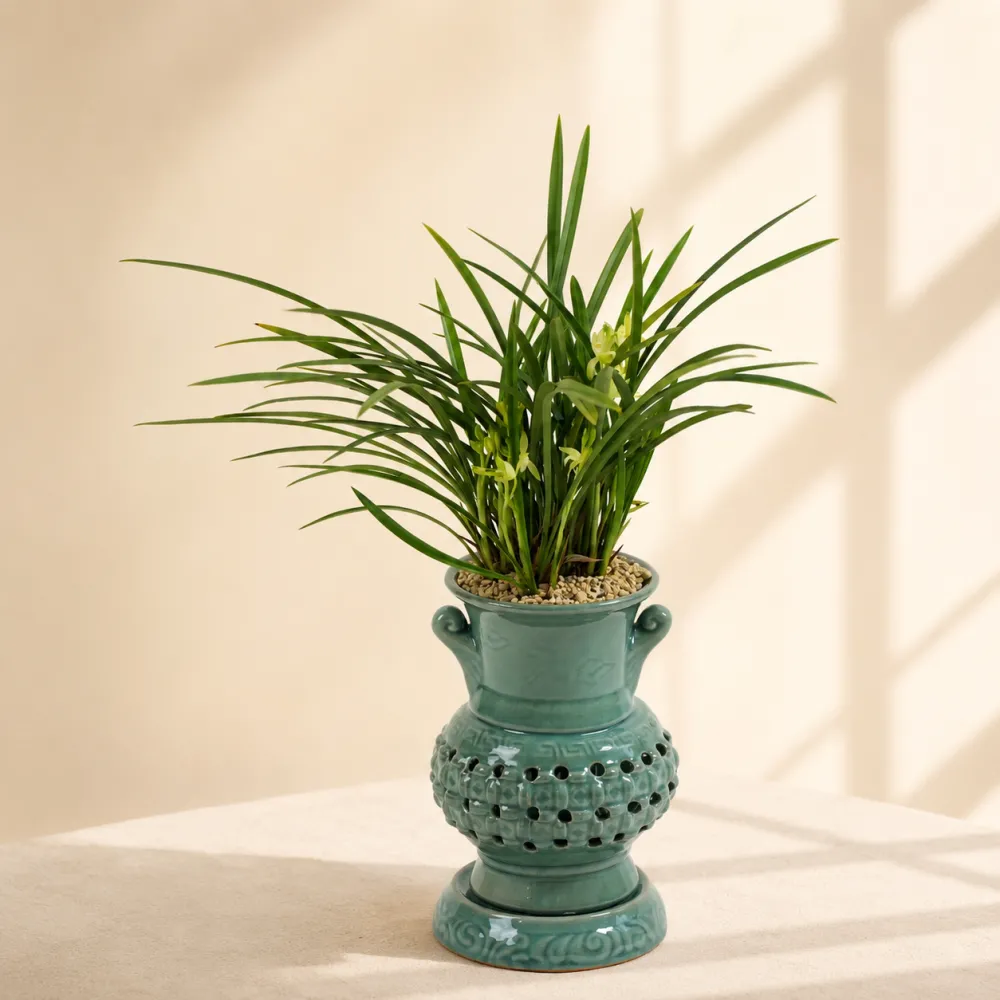
The Cymbidium wears a different expression. If Phalaenopsis is a restrained single line, Cymbidium carries several blooms in a row along one spike — full and showy. Even among orchids, its mood feels far more generous and warm.
Another difference lies in the cold. Where Phalaenopsis favors a warm environment and is sensitive to low temperatures, Cymbidium is relatively cold-hardy. In a somewhat cool space in winter, or in a spot where the temperature is hard to control carefully, the Cymbidium keeps its place far more easily.
An abundance of blooms along a single spike, the Cymbidium — a real photograph of an Arrive in Bloom delivery
Two orchids, two expressions — what to send, and where
Though both are cultivated orchids, the two are particular about their settings. Picture together the feeling you are sending and the space that will receive it, and the choice grows clearer.
Looks: Phalaenopsis opens butterfly-like blooms in turn along one upright spike. Cymbidium bears many blooms on a single spike, full and abundant.
Impression: Phalaenopsis is trim and refined. Cymbidium is showy and generous.
Temperature: Phalaenopsis loves warmth and is sensitive to cold. Cymbidium is relatively cold-hardy.
Where it suits: For openings and inaugurations that call for formality and restraint, Phalaenopsis; for a mood of abundant celebration, Cymbidium.
Phalaenopsis needs little watering. As a rule, depending on conditions, water roughly once every one to two weeks, after checking that the medium inside the pot has dried — and above all, avoid overwatering. What it dislikes most is having its roots left wet for too long. In return, once a bloom opens, it lasts. With good care it can hold its flowers for a month or two, sometimes longer, so the feeling you sent lingers a good while in the place that received it.
An orchid speaks of grace without any fuss
An orchid does not congratulate in a loud voice; with a single trim plant, it quietly raises the dignity of the room.
A good congratulation lasts longer after the moment than during it. Phalaenopsis or Cymbidium, an orchid remains beside you long after the event has ended, keeping the sender in mind. To speak of grace without fuss, yet unmistakably — that is the true calling of an orchid as a gift.
Because Arrive in Bloom wants to convey that grace honestly, we share the orchids we have sent as real, unretouched delivery photographs. We dress the orchids chosen that morning at the dawn wholesale market and send them nationwide, taking orders 24/7. If you would like to compare the different expressions of these two orchids — and our foliage plants — slowly for yourself, you can explore them at flowername.co.kr.
📷Real, unretouched delivery photosNo staging or compositing — the flowers exactly as we sent them
🚚Same-day delivery across KoreaOrder before the regional cutoff and it arrives today
🌷Direct from the wholesale marketDawn-auction flowers, trimmed and shipped the same day
🕐24/7 orderingFor the feelings that arrive at dawn, too
#Phalaenopsis#moth orchid#Cymbidium#orchid gift#opening congratulations#inauguration gift#orchid care
Frequently asked questions
How are Phalaenopsis and Cymbidium different?
Phalaenopsis opens butterfly-like blooms in turn along one upright spike, giving a trim, refined impression. Cymbidium bears many blooms on a single spike, full and showy, and is relatively more cold-hardy than Phalaenopsis. Phalaenopsis suits settings that call for formality and restraint; Cymbidium suits a mood of abundant celebration.
How often should I water a Phalaenopsis, and what temperature suits it?
As a rule, depending on conditions, water generously roughly once every one to two weeks after checking that the medium inside the pot has dried. Above all, it is important to avoid overwatering. Phalaenopsis loves a warm environment and is sensitive to cold, so it is best kept in a warm spot, away from the cold air and drafts of a winter windowsill.
Which orchid is best for congratulating an opening?
For congratulating an opening, an inauguration, or a promotion, the trim and refined Phalaenopsis is the classic choice. A single white Phalaenopsis set by an office entrance or beside the head's desk has become a kind of etiquette. That said, in a cool space, or a spot where the temperature is hard to control carefully, the relatively cold-hardy Cymbidium keeps its place with ease.
How do I care for it after the flowers fade?
A Phalaenopsis bloom lasts a long time, but once the flowers have all faded, trim the spent flower spike and continue as usual — avoiding overwatering and watering only when the medium dries. Keep it in a warm, bright spot of partial shade, and repot it with fresh sphagnum moss or orchid bark once every one to two years, and it can raise a new flower spike the following year.
ARRIVE IN BLOOM
A trim orchid of congratulation, to keep beside you
Phalaenopsis, Cymbidium, and foliage plants are not a few days of beauty but companions that cross the seasons. If you wish to add grace — without any fuss — to the fresh start of an opening or an inauguration, we take orders 24/7, with same-day arrival nationwide for orders placed before each region's daily cutoff. The orchid we send can be confirmed in real, unretouched delivery photographs. Take your time choosing at flowername.co.kr.
Each dawn we choose the day's flowers at the wholesale market and watch them leave for every corner of Korea. We write about the names and seasons of flowers, and the hearts they reach. — Arrive in Bloom
References
· Rural Development Administration (Nongsaro) — floriculture (orchid) cultivation and care information (Phalaenopsis, Cymbidium)
· RDA National Institute of Horticultural & Herbal Science — potted plant (cultivated orchid) cultivation and care materials
· Korea Flower Association — general floriculture materials
· General horticultural references on Phalaenopsis and Cymbidium cultivation
Published June 20, 2026 · by Arrive in Bloom · Flower Editor